Author: Anagha Vijayan, Nazeem Banu VA, Riya PS, Sana PM
Under Graduate students, Department of Clinical Periodontology & Oral Implantology , Royal Dental College, Palakkad, Kerala
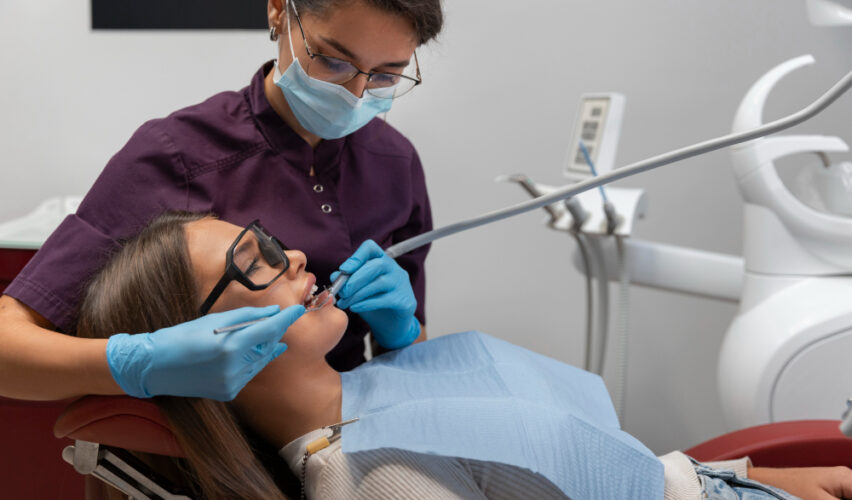
The spread of infection through aerosol and splatter has long been considered one of the main concerns in the dental community because of possible transmission of infectious agents and their potential harmful effects on the health of patients and dental personnel. Aerosol is a suspension of solid or liquid particles containing bacteria, viruses, suspended (for at least a few seconds) in a gas. Particle size may vary from 0.001 to >100 mm. The smaller particles of an aerosol (0.5 to 10 mm in diameter) have the potential to penetrate and lodge in the smaller passages of the lungs and are thought to carry the greatest potential for transmitting infections.The oral cavity harbors numerous bacteria and viruses from the respiratory tract, dental plaque, and oral fluids. Any dental procedure that has a potential to aerosolize saliva will cause airborne contamination with organisms. Dental hand pieces, ultrasonic scalers, air polishing devices, and air abrasion units produce airborne particles by the combined action of water sprays, compressed air, organic particles such as tissue and tooth dust, and organic fluids such as blood and saliva from the site where the instrument is used. Miller found that aerosols generated from patients’ mouths contained up to a million bacteria per cubic foot of air. Other studies have reported association of these aerosols with respiratory infections, ophthalmic and skin infections, tuberculosis, and hepatitis B. Current research suggests that having patients use an antimicrobial rinse before treatment may decrease microbial aerosols.
Visited 5 times, 1 visit(s) today